

Medically reviewed by: Kinga Wojtczak, Doctor of Veterinary Medicine, specialist in canine and feline diseases

Dog lifespan: what can we do to keep our dogs with us, in good health, for as long as possible? You will find practical advice for dog owners in this article. Every owner of a pet dog, regardless of breed or sex, can talk at length about their companion, praising its abilities, intelligence, particular behaviors and the many ways it proves it is special and one of a kind. And without a doubt this is true, because our dog, whether a top-class pedigree champion or an ordinary mutt, is unique, and there is no other like it in the world.
Happily, attitudes toward dogs have often changed as well: dogs have risen remarkably in status, becoming typical household and companion animals. In many cases they are actually members of the family, with many rights and privileges and only occasionally duties. Following patterns from abroad, modern society is ceasing to see the dog as a creature kept on a short chain next to a doghouse, eating table scraps and living a life of its own, as long, of course, as it is healthy and can earn its keep, if only by guarding the yard.
Today, a dog is increasingly treated with respect, cared for and given a great deal of attention in every aspect of its life. As many people's mindset keeps changing, veterinary medicine naturally follows, offering more and more detailed and specialized tests and medical procedures for dogs. All of this so that our canine friends live as long as possible and their owners can enjoy their company.
I think everyone would like their special dog to stay with them for as long as possible, without falling ill, of course, and to remain in good health to the end of its days. Modern dogs live longer and longer, which probably surprises no one, because they benefit from ever more advanced diagnostic tools, better drugs and, above all, greater awareness among their owners and the concrete actions that follow from it.
Still, this lifespan is always too short compared with a human lifespan and with everything we hope for. So what can we do to enjoy our time together for as long as possible, and what should we watch out for? In this article, I will try to describe what we need to know about our dogs' lifespan.
Table of contents:
How long do dogs live?

Every living organism, including the domestic dog, is programmed for a certain lifespan. Life itself is very hard, even impossible, to define precisely in a way that captures all its features. Nevertheless, we understand life as a set of ongoing life processes: specific, highly organized physical and metabolic transformations taking place in thermodynamically open systems that are separated from their surroundings, morphologically structured and made up of many cells forming systems and organs that make up one functional whole.
The definition itself is therefore hard to understand and does not fully capture everything that life is. In everyday terms, we understand life as a property of a body, an organism, characterized by the following attributes: the ability to maintain homeostasis, that is, a stable internal environment, hierarchy, metabolism, growth, adaptation, reproduction and responses to stimuli from the environment. Every living organism, from its beginning, that is, birth, to its natural death, which is the end of life, is subject to the same biological processes and laws.
It is safe to say that from the moment we come into the world until we leave it, we age relentlessly with each passing day, and the process runs at different rates. As a mammalian species, domestic dogs really do have a "programmed" lifespan, and this information is written in every cell of the body. Biological lifespan is a characteristic feature of each species, assigned to it in the form of genetic information.
True, not every individual lives equally long, but we must be aware that there are certain limits that we cannot, for now, cross, and lifespan is one of them. It is one of the basic pieces of information written in the genetic material. Whatever we do and whatever methods we use, no dog will live 40 or 50 years, just as no human will live 200–300 years. From a biological point of view, this is impossible today.
With a longer life come diseases, and individual organs stop performing the functions they were made for as efficiently. It is fair to say that they simply wear out, and we see the consequences more often in a dog's old age. The progress that has been made, and is still being made, in veterinary medicine, new and better diagnostic methods available in every veterinary clinic, and owners' changing awareness have undoubtedly contributed to longer lives for these animals.
A disease diagnosed earlier gives a better chance of a cure or, by delaying symptoms, of keeping its course under control, and therefore of a longer life. Appropriate, balanced nutrition and all preventive measures against infectious diseases have led to a much lower incidence of parasitic and viral diseases. So it should come as no surprise that dogs' lifespan has increased considerably and, depending on the breed, is now a dozen or so years.
Still, we remain powerless against many diseases, and even very well cared-for, frequently examined, properly fed dogs are exposed to numerous conditions that lead to death, that is, to the biological, natural end. Inseparable from lifespan is the aging of the body, an accumulation of adverse changes that weaken physiological functions until they are exhausted, leading to natural death.
Aging is a process that progresses over time and cannot be treated as a disease. Aging is therefore linked to the declining function and capacity of individual body systems and organs, which results in various diseases and a poorer quality of life.
The natural aging process is, of course, driven by genes, but also by:
- existing diseases,
- malnutrition,
- the level of physical activity,
- numerous environmental factors, not all of them understood.
I am writing about this because our dog's lifespan is inseparable from the aging process. Many varied factors, not all of them fully understood, determine lifespan, but one thing can safely be said today. Modern dogs really do live longer than they did not so long ago, and nobody today is surprised by a dog in its teens or even a twenty-year-old dog.
Of course, we give age here in human (calendar) years. The Guinness record for dog longevity belongs to a dog named Bluey, an Australian Cattle Dog, who lived 29 years and 5 months, which certainly makes him exceptional. This dog was born in 1910 and died in 1939. But closer to home, almost everyone knows stories from their own neighborhood, retold by friends or neighbors, about their animals living 20 or 21 years. Such cases do happen, although they are not common.
The aging process in dogs

Seeing such a wide range in our dogs' lifespans, we often wonder how it is that some live much longer than others, even though they may share the same good environmental conditions. In every case, a dog's aging process leads to natural death. We cannot stop or eliminate it, which of course does not mean we cannot fight for the longest possible life, in proper comfort, for our pet.
Of the many theories that try to explain aging, one very general theory seems, for now, logical. It holds that the biological development and life of an organism are genetically determined, written in the material of every cell, and last until the organism naturally wears out. Of course, the speed at which this process progresses depends on many acquired and environmental factors, diseases, nutrition and living conditions, and is the sum of these factors.
Nobody is surprised that some dogs age faster and fall ill more often, while others of the same age enjoy good health. From birth to natural death, however, they are all subject to the same biological processes. Environmental factors, on the other hand, can vary, and this must be kept firmly in mind so that the harmful ones are avoided. In general, the bigger and heavier the dog, the shorter its life. Small dogs with a lower body weight live longer. So, if we like comparisons, let us always make them not within the species as a whole but within a particular dog breed.
Many people also claim that ordinary small mutts live the longest, and sometimes this is indeed the case.
How do you convert dog years to human years?

We all like comparisons, because they give us a rough idea of many aspects of life that interest us. The same goes for dogs' age. In many veterinary clinics you will even find posters on the wall with tables and charts relating to the lifespan of a dog or cat. Let us say right at the outset, of course, that these are only very approximate values that give a rough idea of how old our dog is, but do not reflect the whole truth exactly.
So let us treat them with a good deal of caution and a grain of salt.
| The dog's age | Small dog (up to 9 kg): age in human years | Medium dog (10–23 kg): age in human years | Large dog (23–45 kg): age in human years | Giant dog (over 45 kg): age in human years |
|---|---|---|---|---|
| 1 year | 15 years | 15 years | 15 years | 12 years |
| 2 years | 24 years | 24 years | 24 years | 22 years |
| 3 years | 28 years | 28 years | 28 years | 31 years |
| 4 years | 32 years | 32 years | 32 years | 38 years |
| 5 years | 36 years | 36 years | 36 years | 45 years |
| 6 years | 40 years | 42 years | 45 years | 49 years |
| 7 years | 44 years | 47 years | 50 years | 56 years |
| 8 years | 48 years | 51 years | 55 years | 64 years |
| 9 years | 52 years | 56 years | 61 years | 71 years |
| 10 years | 56 years | 60 years | 66 years | 79 years |
| 11 years | 60 years | 65 years | 72 years | 86 years |
| 12 years | 64 years | 69 years | 77 years | 93 years |
| 13 years | 68 years | 74 years | 82 years | 100 years |
| 14 years | 72 years | 78 years | 88 years | 107 years |
| 15 years | 76 years | 83 years | 93 years | 114 years |
| 16 years | 80 years | 87 years | 99 years | 121 years |
Very roughly, the age of a one-year-old dog can be compared to our 10–15 years. Usually, at 12 months our dog has already reached its full height and is sexually mature, although this generally applies to dogs of smaller breeds. Large-breed dogs grow for longer, and for them the end of growth is taken to be the second year of life. Such a one-year-old dog is therefore a "human teenager," which shows, for example, in its behavior.
The second year of life corresponds to about 9 human years, and each subsequent year to anything from 4 human years in small dogs to 7–9 years in giant breeds. Rapid weight gain, visible to the naked eye, is most noticeable during the first year of life. Of course, such comparisons vary widely depending on the breed and carry a margin of error, so let us not take them too seriously. What is true is that we notice a dog's growth and the changes in its size most clearly in the first year of life.
The age at which the senior period begins also differs and depends on the size of the breed. Dogs of small breeds are considered geriatric when over 11 years old, medium breeds at 10 years, and large breeds over 6–7 years. So the range is huge even within one species, which, given the many breeds, should probably surprise no one. These are also statistical data, which do not always reflect reality, and this should be kept in mind.
No table will capture our dog's age with complete accuracy. Any table is there rather to help the owner of a given breed understand when their dog is entering a particular stage of life and, thanks to that, what to do to care for it as well as possible.
What does a dog's lifespan depend on?

We have already said a little about this, and we know that very many factors, not fully defined, decide how long our dog will live.
Owners often ask questions like these during a visit to the veterinary clinic:
How long will this dog live? Which breed is the healthiest, and which should I choose? Let us be clear: there are no 100% rules here. Modern dogs live longer and longer, which is good news. Many owners also agree that mutts, that is, mixed-breed dogs, live longer than purebred dogs, and in many cases this is indeed so.
The dog's age
We see the highest mortality in young animals, let us say up to about one year of age, and in the oldest ones (15–18 years old), which die of natural causes or existing diseases. The youngest dogs die not only of infectious diseases, but are also more often involved in accidents or suffer poisoning, while older dogs more often develop cancer.
How long do different dog breeds live?

Breed is one of the factors that determine lifespan. Not all dogs mature, age and die at the same time. Breeding carried out over many years to fix certain desirable traits of appearance or temperament also contributes to passing on to the offspring genes responsible for certain diseases, which, for obvious reasons, shorten lifespan.
So it is good to know the history of a given dog family, that is, before buying a puppy, to know as much as possible about its parents and grandparents, how long they lived and what diseases they suffered from. For obvious reasons this is only theory, because dog breeders are reluctant to share such information.
Each dog breed has its own life expectancy, for example:
- Boxer lifespan: 10.4 years,
- Bernese Mountain Dog lifespan: 7 years,
- a golden retriever lives about 12 years,
- dachshund lifespan: 12.2 years on average,
- a standard poodle lives about 14.4 years.
Does a dog's sex affect its lifespan?
Sex may affect lifespan through the diseases associated with it. Male dogs suffer from prostate diseases and from degenerative joint disease due to their greater body weight, and females from mammary gland diseases and pyometra. Any serious, dangerous disease can contribute to a shorter lifespan, so there is probably no need to convince anyone that it must be diagnosed and treated as quickly as possible.
Diseases and injuries can contribute to a shorter life for your dog

Diseases, injuries and accidents during a dog's life are also factors that determine its lifespan. They all shorten lifespan by damaging internal organs and destroying the body's cells. Much of this damage is irreversible (e.g. destroyed nephrons in the kidneys), which undoubtedly affects the dog's lifespan. A dog may get through a given disease without serious consequences and stay healthy to the end of its days, but it may also struggle with serious complications that make its life harder and shorter. That is why all measures aimed at prevention, so that dangerous diseases do not develop wherever this is possible, seem extremely important.
Dog lifespan and physical activity

A dog's lifestyle, physical activity and maintaining a proper body weight undoubtedly affect lifespan. Obese dogs that move little and lie on the couch live shorter lives for obvious reasons, due, for instance, to the higher incidence of diabetes or obesity in them. There are also many environmental factors, not even fully understood, that determine whether our dog stays in good health into late old age.
We can do everything, care for our dog as best we can and follow all veterinary recommendations, and still have a sick dog that leaves us in its prime. This is, of course, no excuse and no release from caring for our pet, but biological processes cannot always be controlled and directed the way we would like.
Lifestyle and environment

The lifestyle and environment in which a dog lives also determine its lifespan. Pet dogs that are under closer supervision and live in closely controlled, safe conditions live longer. Dogs that roam and run around outdoors are more often killed in traffic accidents, suffer injuries in fights, or are more exposed to parasites and infectious diseases. Poisons and cruel, inhumane treatment by people themselves also play a part.
Traffic accidents remain one of the most common causes of sudden death in free-roaming animals in practically every age group. To stay healthy for a long time, every dog must regularly be treated for fleas and dewormed, and periodically vaccinated against infectious diseases. Properly balanced dog nutrition, adapted to age and physiological condition, also plays a significant role. The same applies to therapeutic nutrition when an underlying disease is present. Such support for the treatment of a given problem can sometimes greatly prolong life, a perfect example being the diet in chronic kidney disease.
Surgical neutering or spaying, by removing part of the reproductive organs, prolongs life. This is because by removing a given organ, of course one that is not essential for life, we do not expose the dog to diseases related to it in the future. Each breed has its own genetic predispositions to certain diseases, which we should be aware of when choosing a particular dog.
Of course, this does not always mean that our dog will definitely get sick, but it significantly increases the likelihood of disease, so it is important to pay attention to the relevant symptoms and, if necessary, react quickly. Regular prevention of infectious diseases, that is, vaccination, but also deworming and flea control, also significantly prolongs our dog's life, because it does not expose the dog to premature death from these dangerous, often fatal diseases.
Regular checkups can prolong a dog's life
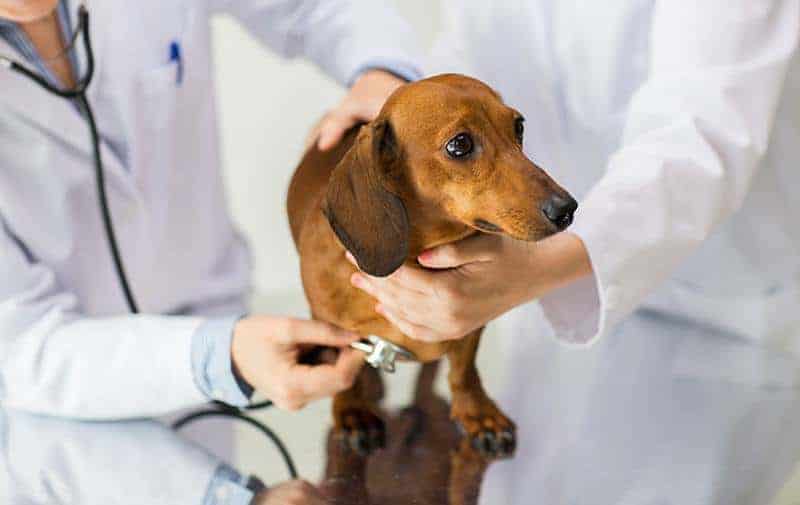
A very important part of caring for a dog that leads to a longer life is regular checkups at the veterinary clinic and getting the tests your veterinarian recommends. Many times, during a visit for a seemingly trivial problem or a routine vaccination, worrying signs have been noticed in a patient that, after a thorough diagnostic workup, turned out to be a particular disease. And many conditions diagnosed early, even when they are incurable, can be treated, which leads to a better quality of life and a longer life.
So let us not dismiss even the smallest symptoms, following the principle that it is better to be overcautious than to regret later not having taken full care of our friend. With that in mind, let us remember to have regular blood tests, urinalysis or an abdominal ultrasound done at least once a year, and more often in animals in a higher-risk group.
Oral hygiene in dogs

Oral hygiene, that is, brushing your dog's teeth, also remains important. This is not only about the health of the teeth themselves but also about serious complications that may appear in organs, often distant ones. A perfect example is chronic kidney disease, which diseased teeth with a lot of tartar and plaque full of bacteria and their toxins accelerate.
Does dog food affect lifespan?

There is probably no need to convince anyone that a healthy, balanced diet adapted to the dog's physiological condition and age, complete in every respect, matters enormously for lifespan. A deficiency of vitamins and trace minerals will very quickly show up as visible clinical signs. Therapeutic nutrition, which should be given when a disease is present, is also extremely important.
Although it does not treat disease directly in itself, it supports the action of drugs, does not burden failing organs, and creates better conditions for their regeneration; in a word, it speeds up and improves the treatment process, and thereby definitely prolongs life. Many chronic diseases that we cannot cure can be controlled this way for a long time. Like people, our pet "is what it eats."
Dog lifespan and temperament

Our dog's personality traits also affect its lifespan. Animals that are friendlier toward others and less fearful are more exposed to bites in contact with other animals. More cautious ones, on the other hand, usually live longer, avoiding anything unfamiliar and potentially dangerous.
Effects of aging and signs of old age in dogs

As we have already said, aging is a continuous process whose effects do not show at once, from one day to the next, but only after several years. Over time, functional and structural changes take place in dogs' bodies, which also shows in changes in the dog's habits and behavior. Many a dog behaves like a puppy even at a very advanced age, while others start to show signs of old age at just 7–8 years.
In older animals the metabolic rate slows, which, combined with lower physical activity, makes it necessary to reduce the calorie content of meals. The immune system and all processes responsible for proper immunity (e.g. phagocytosis and chemotaxis) become less efficient. Older animals have a reduced ability to fight infections. Their percentage of body fat increases and their muscle mass decreases.
The skin becomes thicker, more pigmented and less elastic, and its appendages, e.g. the claws, more brittle and fragile. Degenerative changes develop in the joints, as does inflammation of the bones. Tartar and periodontal disease can cause tooth loss and malocclusion. The number of liver cells and of nephrons in the kidneys decreases. The ability to produce pancreatic enzymes declines. Lung vital capacity and the heart's contractile function decrease, which results in heart failure.
Often urinary incontinence appears. The testicles atrophy and the prostate gland enlarges. The bone marrow undergoes fatty change and hypoplasia, which can result in anemia. The number of nerve cells falls, which shows in changes in learned behaviors. With age, the risk of all diseases and of failure of individual organs increases. An older dog simply looks old, which any layperson will notice without difficulty.
An older dog is less active, lies down and rests a lot, tires more quickly, has trouble moving and getting up from its bed, and often has a graying coat. Its movements are less graceful, slow and less coordinated; it moves heavily, and it is sometimes hard to persuade it to go for a walk. It has a poorer appetite, which can result in weight loss, that is, progressive emaciation.
It may also be obese because of reduced mobility caused by degenerative changes in the joints and spine. An older dog is nothing like its younger self, often showing behaviors that seem completely out of character. But this is the natural order of things, which each of us will have to face sooner or later.
Diseases of older dogs

An older dog can develop practically any disease, affecting all body systems and organs without exception. It also often suffers from several diseases at the same time, which complicates not only diagnosis but also any treatment. It is impossible to discuss every possible problem in an older animal; this is exactly what the field known as geriatrics deals with.
Very briefly and in simplified terms, we can safely venture to say that in old age the following come to the fore:
- cancer,
- kidney disease,
- degenerative joint and spine disease,
- failure of organs such as the liver,
- dental and periodontal disease,
- injuries.
Older dogs make up a large share of the patients at veterinary clinics, where their owners expect veterinarians to delay or limit the progressive age-related changes in individual body systems and organs. All this is, of course, possible to some extent thanks to comprehensive veterinary care based not only on treating diseases but also on proper nutrition.
Many of these problems are strongly promoted by an incorrect body weight, obesity and too little exercise. Others seem to come out of nowhere because, as the owner says, the dog was never ill and was a picture of vitality all its life. What is certain is that an older animal will need considerably more attention from its owner and more intensive veterinary care. Their treatment may also turn out to be long-term, if not lifelong, as is the case with chronic diseases.
This is a kind of rule that we unfortunately have to accept, acknowledging that an older animal often needs constant and therefore also costly care, which we should remember when taking on a puppy. After all, one day it will become an adult and then a senior. We also need to prepare ourselves mentally for the moment when further prolonging life and treating an incurable disease no longer makes much sense. That is when we should consider euthanasia.
Our dog, with whom we have spent many years, simply deserves a good death, and it is undoubtedly an expression of our humanity. So let us not insist on treatment at all costs, prolonging the suffering and discomfort of an incurably, seriously ill dog.
How can you extend your dog's life?

Statistical data describing the lifespan of a given breed can never be treated as gospel. True, they are based on many observations and so reflect the truth to some degree, but they do not mean that our dog cannot live longer than they would suggest. We cannot change the genetic material present in every cell of a dog's body or reprogram it for a longer life. Let us remember, however, that we have a huge influence on the environmental factors that determine the quality and comfort of a dog's life.
After all, we, the owners, are responsible for shaping the dog's life. A well-functioning immune system is important, so all measures aimed at strengthening nonspecific immunity are fully justified. Leaving everything to blind chance and relying on it alone is a very irresponsible approach. In truth, nobody knows how long a given dog will live or what disease it will develop, which does not release us from the duty to do everything possible to take the best care of the animal.
Seemingly small, unimportant choices and actions can prolong our pet's life. We just need to be aware of them, because that is the first step toward putting them into practice. Providing a good, healthy lifestyle with an appropriate amount of regular exercise, together with balanced nutrition, matters enormously for longevity. This should go hand in hand with a proper body weight, monitored throughout life, and not allowing obesity in your dog.
We should not forget regular health checks at the veterinary clinic and having all recommended tests done. Many diseases need not produce very obvious clinical signs from the very start, only barely noticeable changes. The earlier they are detected, the sooner treatment can be started. Let us also always use an appropriate diet tailored to the individual patient, taking into account its health status and any conditions it has.
The environment our dog lives in should be calm and free of unnecessary stress, so that the dog has safety and comfort. Of course, these are only very general guidelines, because each case should be handled slightly differently. So let us always ask the veterinarian how best to care for our dog, given the individual patient and any diseases. Like people, dogs never die of old age, but of a specific health problem associated with it.
Summary

I cannot answer the question of how long your dog will live, or why in many cases only that long. Nobody really knows, just as nobody knows what will cause it to leave this world. One thing I know for sure: a dog's lifespan is the result of many factors, and many of them we can really influence. We cannot change genes, but lifestyle and diet, definitely yes. We will not protect our pets from every possible disease, but we can detect many of them early and control them effectively for a long time, thereby prolonging the dog's life.
Sometimes, with skillful anti-inflammatory and pain-relief treatment, we can greatly improve the quality of life of an incurably ill dog. It is important not to let it suffer needlessly. Sooner or later, the moment will come when our options run out, and then we should decide on euthanasia, which, although a last resort, is also an expression of our care for the animal.
Of course, I wish everyone that this moment comes as late as possible, and that we can enjoy our dog's company and good health.
